Wednesday, 13 November 2013

iPhone 5s Shipping Estimates Improve to 1 to 2 Weeks in All Countries

Apple's iPhone 5s supplies appear to be improving, following significant supply constraints that have plagued the phone since its initial September 20 launch. In the Online Apple Store, iPhone 5s shipping estimates have decreased, with all models and capacities, including gold, now shipping within one to two weeks in the United States, Canada, Europe, and Asia Pacific.
shippingtimes
Shortly after the launch of the iPhone 5s, shipping estimates for all colors and capacities slipped to 7 to 10 days and fell to a vague "October" timeline. In the middle of the month, shipping estimates were updated to two to three weeks, where they have remained until today.

According to several different reports, Apple significantly ramped up its iPhone 5s production in the weeks following the phone's launch while simultaneously cutting down on iPhone 5c production. Supplies of the iPhone 5c have remained plentiful since the phone was launched and all models and capacities continue to ship within 24 hours.

Apple's improved shipping estimates come following second and third wave launches on October 25 and November 1 that brought the iPhone 5s and the iPhone 5c to an additional 50 countries. The iPhones are now available in more than 60 countries, bringing Apple closer to its stated goal of availability in 100 countries by the end of the year.

In store supplies of the iPhone 5s appear to be improving as well, with even the gold iPhone 5s seeing greater availability as a Personal Pickup option across the United States.

Apple's TV Plans Reportedly On Hold Again as Wearables Take Priority

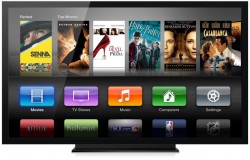
apple_tv_interface_2012While Apple has been rumored for a number of years to have been working on a television set project, reports have become more scarce over the past year as interest in a potential smart watch has gained steam. According to a report from NPD DisplaySearch, the rumor trends are indeed a reflection of what is happening at Apple, with the company apparently putting the TV project "on hold again" as wearables such as the "iWatch" have taken priority.
According to sources in the TV supply chain, it appears that Apple’s long-rumored TV plans, which were far from concrete anyway, have been put on hold again, possibly to be replaced by a rollout of wearable devices. Although many financial and industry analysts have been speculating about Apple’s entrance into the TV business via an actual TV (instead of the Apple TV “hobby” set-top-box) for years, during the last year the rumor-mill has shifted into high gear about a 2014 introduction. Indeed, our own information from TV supply chain sources pointed to the fact that Apple appeared to be lining up resources for a product introduction in the second half of 2014, likely with 2-3 large screen sizes and 4K resolution.
However, the hangup has always been the content.
The report is not specific about how DisplaySearch has arrived at its conclusion that Apple's TV project has been put on hold, but the firm closely watches the display supply chain and likely is not yet seeing any significant movement toward an Apple television.

Apple has reportedly been working on advancing its Apple TV set-top box, but Apple's efforts to revolutionize the television experience will require the company to reach agreements with content providers and cable companies, a process that has been underway for several years but yet to result in any significant progress.

Meanwhile, focus on Apple wearables has continued to pick up steam amid continuing rumors that the company is shooting for a late 2014 launch of an iWatch that would run "full iOS". Fueling speculation in recent days has been an announcement that Apple will build a major new manufacturing plant in Arizona to produce sapphire glass. While sapphire is currently used to protect the iPhone's rear camera and the Touch ID sensor of the iPhone 5s, the deal points to a major expansion of Apple's sapphire plans that could include scratch-resistant wearable devices or even full sapphire glass front panels for future iPhones.

Apple Maps Significantly More Popular Than All Other iOS Mapping Apps, Including Google

After a rough launch last year, Apple Maps appears to be doing very well for itself, with 35 million U.S. iPhone owners using the app in September 2013, versus 6 million iOS users of the downloadable Google Maps according to data from comScore and The Guardian.
The data remains a little fuzzy as neither Google nor Apple publicly release their usage figures, but if they are even close to correct, Apple has largely succeeded with its Maps rollout and Google has lost a tremendous number of Maps users in just a year.

It's likely that Apple's success is largely due to the incredible advantage default apps hold on mobile platforms, with the majority of users finding Apple Maps to be "good enough" and not looking for an alternative.

Googleapplemaps According to comScore, Google Maps has gone from 81.1 million mobile U.S. users last year to just 58.7 million this year, a drop of more than 20 million. At the same time, the total number of iPhone and Android phone users in the U.S. increased from 103.6 million to 136.7 million. comScore attributes this significant drop largely to the introduction of Apple Maps as the default app on iPhones, as well as an increasing share of younger users that don't use any mapping application.

ComScore's data shows that in September 2013, 35m used Apple's maps at least once during the month, out of a total iPhone population of 60.1m. The 58% usage on the iPhone is reckoned to reflect the growing number of younger users who do not use mapping services; the proportion of iPhone users who use any mapping service, including Google's, has been dropping since April 2012, according to ComScore's data.
Wood said: "The thing is, on an iPhone all roads lead to Apple's maps. They're putting this front and centre for users, and getting more confident." For Google, he said, "They're very fortunate that Android is a big source of data - they will be very relieved at that." He cautioned that US iPhone users might be more eager to use Apple's maps because there seem to be fewer errors there compared to other regions, including Europe.
35 million iPhone owners used Apple Maps in September, out of 60.1 million total iPhone owners in the United States, some 58 percent. Based on The Guardian's modeling, this means roughly 8.3 million iPhone users are using an alternative mapping application like Google Maps, with approximately two million of those using the pre-iOS 6 default Google Maps application because they have not upgraded to a newer version of the iOS.

Friday, 8 November 2013

Boost Mobile Offering $200 In-Store Discounts on iPhone 5s and 5c for Switchers

In line with previous announcements, Sprint prepaid subsidiary Boost Mobile began offering the iPhone 5s and iPhone 5c today, marking the first time the brand has offered any model of iPhone for sale.
boost_mobile_iphone_5s_5c
While Boost's standard pricing available online already includes a $100 discount on every model compared to Apple's standard pricing for unsubsidized models, the carrier is offering an additional $100 off through November 24 to customers who are switching from another carrier and who make their purchases at one of the brand's retail stores.

It is the perfect time to switch to Boost Mobile as now through Nov. 24 new customers who come into a participating Boost Mobile store and switch to Boost Mobile from another carrier will be eligible for a special in-store promotion of $100 off any device bringing new customers additional cost savings.
The in-store promotion for switchers brings the entry-level cost of the iPhone 5s down to $449.99 and the iPhone 5c down to $349.99. For service, Boost Mobile offers a $55/month contract-free unlimited talk/text/data plan, although data is throttled once users reach 2.5 GB in a given month. Customers can also reduce their monthly fees by making on-time payments, with Boost reducing the charge by $5 for every six on-time payments made, down to a minimum of $40/month after 18 months.

While iPhone 5c supplies are plentiful, potential Boost Mobile customers are likely to have a harder time tracking down supplies of the iPhone 5s, as is the case throughout Apple's distribution network. All iPhone 5s models are currently listed as "Out of Stock" on Boost Mobile's online store.

Boost Mobile is not the only carrier to launch new sales of Apple's latest products over the past couple of days, as U.S. Cellular is now carrying Apple's full lineup of iPhones and cellular-capable iPad Air and non-Retina iPad mini models. Socially active mobile virtual network operator CREDO Mobile, which runs on Sprint's network, has also begun offering the iPhone with on-contract pricing discounted $50 compared to standard Apple pricing.

Mississippi-based regional carrier C Spire, Alaskan carrier GCI, and Kentucky-based regional carrier Bluegrass Cellular have also begun selling cellular-capable models of the iPad Air.

Low Retina iPad Mini Production Reportedly Due to Burn-In Issue on Sharp's Display Panels

Last week, a report from Japanese business newspaper Nikkei shed light on the production issues surrounding the forthcoming Retina iPad mini, stating that Apple is now turning to rival Samsung as suppliers Sharp and LG Display have failed to produce an ample supply of displays for the new tablet. Now, a report from Korean website ETNews (via Unwired View) has elaborated on the matter, with Sharp's IGZO panels for the Retina iPad mini said to be suffering from screen burn-in issues.
While the burn-in issue is reportedly invisible to users, the panels do not meet Apple's specifications and thus the high rejection rate has resulted in low panel yields for the tablet. As noted in a report earlier this week analyzing the new iPad Air's use of IGZO technology, Sharp has experienced difficulties ramping up production of its IGZO panels in the past, with it taking until now for Apple to bring the technology to its products.

ipadminiretinapromo3

The burn-in problem was caused by the drastic reduction of the pixel size. The resolution of the 7.9-inch iPad mini with Retina display is 2048×1536, about four times clearer than the existing 1024×768 products. LG Display used the amorphous silicon (a-Si) for the substrate, whereas Sharp used IGZO. The pixel of the smartphone display is smaller than that of the iPad mini Retina panel, but as the Low Temperature Polycrystalline Silicon (LTPS) technology is used, it can be produced stably. The pixel of the iPad mini Retina is the smallest among those products using a-Si. Sharp failed to solve the chronic problem of IGZO, i.e. uniformity, and its yield went down.
The report also elaborates on how Apple may be negotiating with Samsung to produce displays for the device starting next year, turning back to its rival in part due to Samsung's experience solving a similar problem with third-generation iPad's move to a Retina display.
Apple is negotiating with Samsung Display for the supply of displays starting next year. Apple discussed cooperation with Samsung Display when it was planning on the iPad mini Retina. AUO, which was the iPad mini display supplier, was excluded from the retina version because of its yield problem. Apple was planning to receive 15 million panels from LG Display, Sharp and Samsung Display at the end of this year. However, as the negotiation with Samsung Display fell through, only LG Display and Sharp made it to the final list of primary suppliers.
If the issue of screen burn-in persists, the report also states that Apple may move to LTPS technology such as that seen in the Kindle Fire HDX, as it is less prone to the problem. However, while LTPS is commonly used on displays for smaller devices such as the iPhone, Apple is unlikely to mass produce the displays for larger screens in part due to scalability issues that simply won't support the tens of millions of tablets that the company is producing each year.

Apple CEO Tim Cook stated last week during the company's fourth quarter earnings call that it was "unclear whether we will have enough for the quarter or not," as the company has only promised that the tablet will arrive by the the end of November. As noted by Apple during the introduction of the second-generation iPad mini, a Retina display has been one of the most requested features for the smaller iPad since its release last year.

Update: MacRumors spoke with Ray Soneira of DisplayMate Technologies, who noted that LG is almost certainly not using a-Si for its Retina iPad mini display panels due to significant power issues with trying to drive a display of that pixel density using the technology. The company has also been shipping its own IGZO display panels for some time now, and Soneira pointed out that "it would be very inefficient to engineer the iPad mini to ship using two significantly different display technologies."

Soneira also clarified that "burn-in" is the incorrect term for what would be happening with these LCDs. It would be a short-term image retention issue perhaps similar to what some early Retina MacBook Pro users experienced, although it appears in this case that the effect is invisible to users

Apple Releases Mail Update for Mavericks to Address Gmail Issues

Apple today released Mail Update for Mavericks 1.0, a software update designed to enhance compatibility with Gmail accounts, as well as several other improvements. The update entered testing last week and addresses a number of complaints about changes Apple made in Mavericks Mail.

mavericks_mail_update


Mail Update for Mavericks includes improvements to general stability and compatibility with Gmail, including the following:

- Fixes an issue that prevents deleting, moving, and archiving messages for users with custom Gmail settings
- Addresses an issue that may cause unread counts to be inaccurate
- Includes additional fixes that improve the compatibility and stability of Mail
Full information on the update, including Apple's recommendations about backing up before applying the update, are included in an Apple support document. The update is available via the Software Update mechanism in the Mac App Store.

Thursday, 7 November 2013

U.S. Senate Approves Anti-Discrimination Bill Endorsed by Tim Cook

Tim CookThe United States Senate has approved the anti-discrimination bill that Apple CEO Tim Cook endorsed in an Op-Ed earlier this week.
In a 64-32 vote, the Senate voted to pass the Employment Nondiscrimation Act today, sending the legislation to the U.S. House of Representatives where its future is uncertain. The bill adds gay, lesbian, bisexual and transgender individuals to the U.S.'s existing nondiscrimination law.

Tim Cook tweeted about the passing of the bill, saying:

Thanks to all Senators who supported ENDA! I encourage the House to follow suit and end discrimination.
From The New York Times:
“The time has come for Congress to pass a federal law that ensures all citizens, regardless of where they live, can go to work not afraid of who they are,” Senator Harry Reid, the majority leader, said on Thursday, noting that a vast majority of Americans already think such a law is in place. “Well, it isn’t already the law,” he added. “Let’s do what the American people think already exists.”
Republicans who voted against the bill, known as the Employment Nondiscrimination Act, were muted in their opposition. The first senator to rise and speak against the bill on the floor all week was Dan Coats of Indiana, who said Thursday morning that religious freedoms were at risk, despite the bill’s broad exemption for religious institutions.

Those exemptions, he said, did not go far enough.
In his op-ed, Tim Cook wrote that Apple has made it a point to create "a safe and welcoming workplace for all employees, regardless of their race, gender, nationality or sexual orientation", while also elaborating on employee rights to express identity in a working environment.